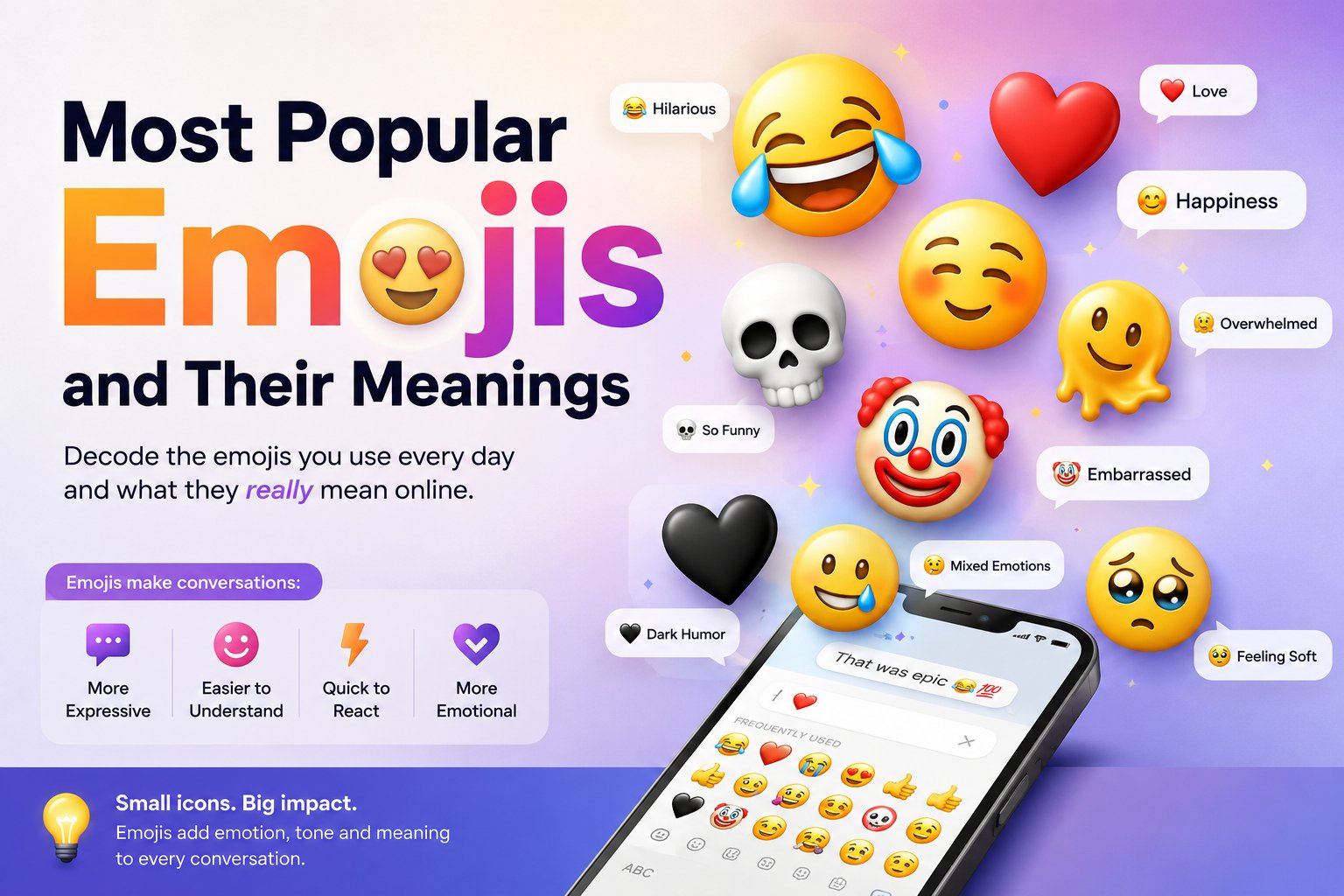


Most Popular Emojis and Their Meanings
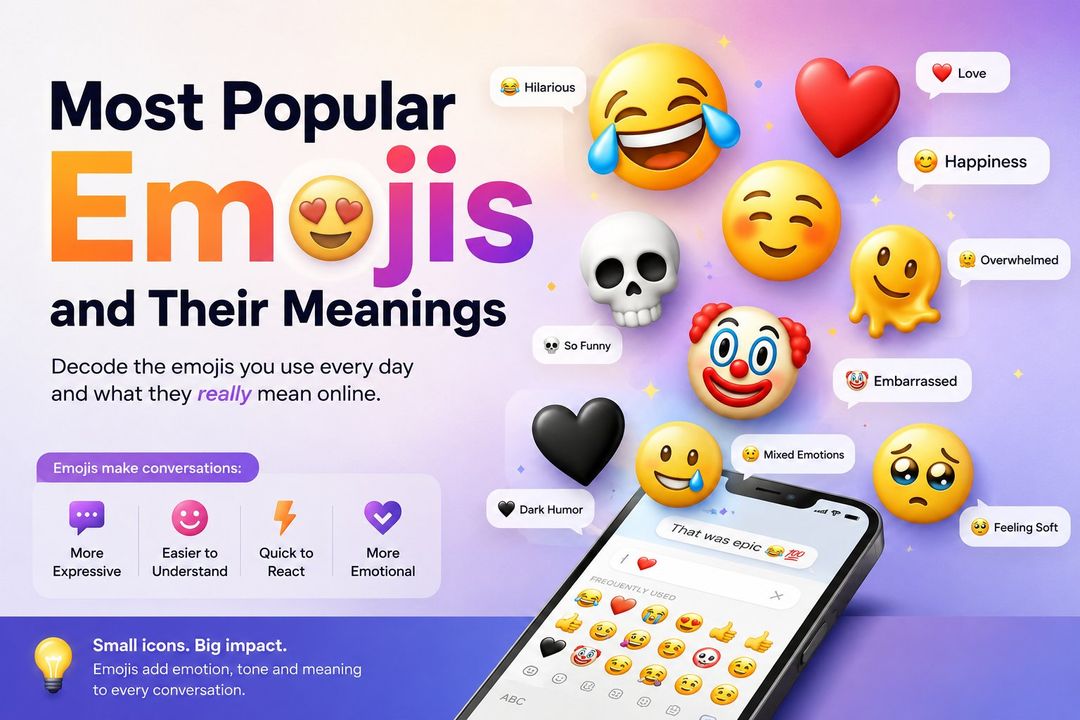
Think about the last few messages you sent today. There’s a pretty good chance at least one emoji showed up somewhere in the conversation.
That’s just how online communication works now.
People use emojis almost without thinking anymore. A laughing face replaces a full reply. A heart reacts faster than words. Even random symbols somehow make complete sense depending on the situation.
And honestly, it’s kind of interesting how much these tiny icons changed internet conversations.
Years ago, emojis were just simple additions to text messages. Now they carry emotions, sarcasm, jokes, reactions, and even internet slang. Some emojis still mean exactly what they originally meant. Others completely changed because of social media culture.
Take the 💀 skull emoji for example.
Technically, it represents death.
But online? Most people now use it when something feels painfully funny or unbelievably embarrassing.
That’s the strange thing about internet culture meanings evolve constantly.
In this guide, we’re breaking down the most popular emojis and their meanings, including the hidden meanings behind trending emojis people use daily on Instagram, TikTok, WhatsApp, Snapchat, and other social media platforms.
Why Emojis Became So Popular
Text messages can sometimes feel cold or awkward.
When people talk in real life, there’s tone, facial expressions, pauses, reactions, and body language. Most of that disappears online.
Emojis help fill that gap.
A simple message like:
“Okay.”
can sound annoyed.
But:
“Okay 😊”
feels softer and friendlier instantly.
That small emotional difference matters more than most people realize.
People use emojis because they help conversations feel:
- more expressive
- easier to understand
- less serious
- more emotional
- quicker to reply to
And honestly, sometimes one emoji explains a feeling faster than an entire sentence.
That’s a huge reason emojis became common across platforms like:
- TikTok
- Snapchat
- Discord
- X (Twitter)
At this point, emojis are basically part of the online language itself.
Popular Smile Emojis and Their Meanings
😀 Grinning Face
Probably one of the safest emojis online.
Usually represents friendliness, positivity, or simple happiness.
People use it when they want conversations to feel welcoming or casual.
Example:
“Hope everything goes well 😀”
😃 Smiling Face With Big Eyes
This emoji feels slightly more energetic compared to the normal grin.
Usually connected with:
- excitement
- enthusiasm
- cheerful reactions
- positive energy
It adds a brighter tone to conversations.
😂 Face With Tears of Joy
For years this was basically the internet’s favorite emoji.
People use it when something feels genuinely hilarious.
Not just mildly funny more like:
“I can’t stop laughing.”
Example:
“That meme absolutely destroyed me 😂”
Interestingly, this emoji became so popular at one point that it was named “Word of the Year.”
Which still sounds strange honestly.
🤣 Rolling on the Floor Laughing
Think of this as the more dramatic version of 😂.
Usually used when something feels completely ridiculous or chaotic.
Common under memes, TikToks, and funny videos.
Example:
“I watched that clip five times already 🤣”
😊 Smiling Face With Blush
This emoji feels calmer and softer.
Usually connected with:
- kindness
- appreciation
- gratitude
- warmth
- shy happiness
It often makes conversations feel more genuine.
🙃 Upside-Down Face
This emoji became extremely popular because sarcasm became a huge part of internet humor.
Depending on context, it can mean:
- awkwardness
- hidden frustration
- pretending everything is okay
- playful sarcasm
A lot of younger users use this ironically now.
Sad Emojis and Emotional Meanings
😢 Crying Face
Pretty straightforward overall.
Usually represents sadness, disappointment, or emotional moments.
Example:
“I really miss those days 😢”
😭 Loudly Crying Face
This emoji changed meaning heavily online.
Originally it represented intense sadness.
Now people also use it when something feels unbelievably funny.
You’ll constantly see comments like:
“That video has me crying 😭”
So context matters a lot here.
😔 Pensive Face
This emoji feels quieter emotionally.
Usually connected with:
- overthinking
- emotional exhaustion
- reflection
- disappointment
Less dramatic compared to crying emojis.
Heart Emojis and Their Different Meanings
Heart emojis may look similar, but online they often carry completely different emotional tones.
❤️ Red Heart
The classic heart emoji.
Usually connected with:
- love
- romance
- affection
- emotional closeness
Still the most universally used heart emoji online.
💛 Yellow Heart
Feels lighter emotionally.
Usually connected with friendship, positivity, and happiness rather than romance.
Very common among close friends.
💙 Blue Heart
People often associate this emoji with:
- trust
- loyalty
- support
- calmness
Often appears in supportive conversations.
🖤 Black Heart
One of the most misunderstood emojis online.
Depending on context, it can represent:
- dark humor
- sadness
- internet irony
- alternative aesthetics
Very common among meme pages and Gen Z users.
🤍 White Heart
Usually connected with:
- peace
- kindness
- calm emotions
- minimalist aesthetics
This emoji became especially popular in aesthetic social media posts.
Gen Z Emojis That Completely Changed Meaning
Internet culture transformed certain emojis into something completely different.
💀 Skull Emoji
Originally:
death.
Now?
“That was painfully funny.”
Probably one of the biggest emoji meanings changes online.
Example:
“That comment finished me 💀”
🤡 Clown Emoji
Usually used when somebody feels embarrassed or foolish.
People mostly use it jokingly on themselves.
Example:
“Me believing that again 🤡”
🫠 Melting Face
One of the newer emojis that became relatable very quickly.
Usually represents:
- stress
- awkward situations
- burnout
- emotional exhaustion
Honestly feels very accurate for modern life online.
🥲 Smiling Face With Tear
Represents mixed emotions surprisingly well.
Trying to stay positive while struggling internally is basically the vibe of this emoji.
Why Emoji Meanings Keep Changing
Internet culture moves incredibly fast.
A joke starts on TikTok, spreads through memes, appears on Instagram, and suddenly millions of people begin using an emoji differently.
That’s basically how emoji meanings evolve now.
Some major examples include:
- 💀 becoming laughter
- 😭 becoming dramatic humor
- 🤡 becoming embarrassment humor
- 🫠 becoming emotional burnout
And honestly, those meanings will probably keep changing again.
That’s just how internet culture works.
Most Used Emojis on Social Media
Some emojis appear everywhere because they fit almost every type of conversation.
The most commonly used emojis right now include:
- 😂
- ❤️
- 🔥
- 😭
- 🤣
- 😍
- 👍
- 💀
- 😊
- 🙌
Open almost any comment section online and you’ll probably see several immediately.
How Emojis Changed Online Communication
Emojis may seem small, but they affect online conversations heavily.
They help people:
- express emotions quickly
- soften serious messages
- make jokes easier to understand
- react instantly
- avoid misunderstandings
Without emojis, many online conversations would probably feel colder and more confusing.
That emotional layer matters more than most people think.
Final Thoughts
Emojis started as tiny digital symbols people added to messages for fun. Now they’ve become a major part of internet culture itself.
Some still keep their original meanings. Others completely changed because of memes, sarcasm, TikTok humor, and social media trends.
And honestly, that’s part of what makes emoji culture interesting.
The meanings evolve alongside the internet.
Whether you’re texting friends, replying to memes, posting on Instagram, or scrolling TikTok comments late at night, understanding popular emojis and their meanings makes online conversations feel much less confusing.
Frequently Asked Questions
1. What is the most popular emoji?
The 😂 Face With Tears of Joy emoji is still one of the most used emojis worldwide.
2. What does 💀 mean online?
Most people now use the 💀 skull emoji to mean something is extremely funny.
3. Why do emoji meanings change?
Internet culture, memes, TikTok trends, and social media communities constantly create new meanings for emojis.
4. What does 🫠 mean?
The melting face emoji usually represents stress, awkwardness, emotional burnout, or feeling overwhelmed.
5. Which heart emoji represents friendship?
💛 The yellow heart emoji is commonly associated with friendship and positivity.
6. Why is the 🤡 clown emoji popular?
People use the clown emoji jokingly when they feel embarrassed or foolish.
7. Which emojis are used most on social media?
Some of the most used emojis include:
😂 ❤️ 🔥 😭 🤣 💀 😊 🙌
8. Why are emojis important in texting?
Emojis help messages feel more emotional, expressive, and easier to understand.