
homefleet-callhomefleet-whatsapp

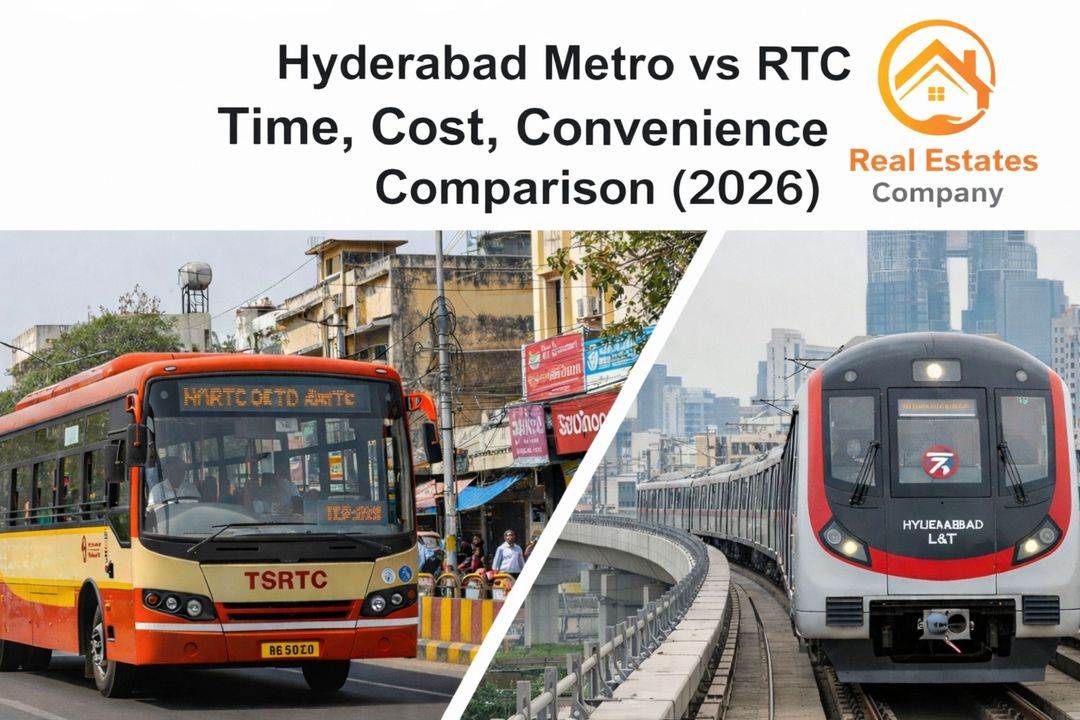
Hyderabad Metro vs RTC Travel: Time, Cost & Convenience Comparison (2026)
Author Name Hemanth Kumar
Jan 07, 2026
Hyderabad Metro vs RTC Travel: Time, Cost & Convenience Comparison (2026)

Hyderabad has grown rapidly over the last decade. From being a city with limited traffic pressure, it has transformed into a major IT and business hub with expanding residential zones, tech parks, and commercial corridors. With this growth, one daily challenge every resident faces is commuting.

Among all public transport options, two systems dominate everyday travel:

Hyderabad Metro Rail and TSRTC (Telangana State Road Transport Corporation) buses.

Both are essential. Both serve millions daily. Yet, commuters often ask:

Which one is better? Metro or RTC?

The answer is not as simple as choosing one over the other. It depends on time, cost, comfort, distance, peak hours, and personal routine. This detailed guide compares Hyderabad Metro and RTC buses from a real commuter’s perspective, helping you choose the right option for your daily needs.

Understanding Hyderabad’s Public Transport Landscape

Hyderabad’s public transport ecosystem works like a network rather than isolated systems. Metro trains connect major corridors quickly, while RTC buses ensure connectivity to areas where metro lines do not reach. Many daily commuters rely on a combination of both, depending on where they live and work.

Before diving into comparisons, it’s important to understand what each system is designed for:


  • Hyderabad Metro focuses on fast, predictable, long-distance urban travel.


  • RTC buses focus on maximum coverage, affordability, and flexibility.


Now, let’s compare them point by point in a practical, everyday context.

1. Time Efficiency: How Fast Can You Reach Your Destination?

Time is the biggest deciding factor for most commuters, especially office-goers and students.

Hyderabad Metro  Predictable & Fast

The metro operates on elevated tracks, completely separated from road traffic. This is its biggest strength. Trains maintain almost the same travel time regardless of peak or non-peak hours.


For example:

  • Ameerpet to HITEC City by metro usually takes around 25–35 minutes


  • The same route by road during peak hours can take 60–90 minutes


Metro trains run at fixed intervals, and delays are rare. Even during rush hours, you can estimate your arrival time with confidence.

RTC Buses – Traffic Dependent

RTC buses operate on city roads, which means:


  • Travel time depends heavily on traffic


  • Peak hours, rain, roadworks, and accidents can cause delays


  • Early mornings and late nights are faster, but office hours are unpredictable


Verdict on Time:

If time certainty matters, Metro clearly wins. RTC works well only when traffic conditions are favorable.

2. Cost Comparison: Which Is More Budget-Friendly?

Cost is where RTC often has an advantage, especially for short trips.

RTC Bus Fares

RTC offers multiple bus types:


  • Ordinary buses (lowest fares)


  • Metro Express


  • Deluxe and AC buses


  • Electric buses on select routes


Short-distance fares can start as low as ₹5–₹10, making RTC ideal for nearby travel. Monthly and student passes further reduce costs for frequent riders.

Metro Ticket Pricing

Metro fares are distance-based:

  • Minimum fare is affordable


  • Longer distances cost more


  • Smart Cards offer small discounts and convenience


For long daily commutes, metro may feel slightly costlier than ordinary buses, but the trade-off comes in time and comfort.

Verdict on Cost:

For pure affordability, especially short distances, RTC is cheaper. Metro is cost-effective when time saved is valued.

3. Comfort & Travel Experience

Comfort can make or break a daily commute, especially for long journeys.

Metro Comfort

Metro trains are:


  • Fully air-conditioned


  • Clean and well-maintained


  • Smooth and noise-controlled


  • Equipped with escalators, lifts, and digital displays


Even standing travel feels manageable due to better crowd control and coach design.

RTC Comfort

RTC comfort varies by bus type:

  • Ordinary buses can be crowded and non-AC


  • AC buses are comfortable but limited in number


  • Seating is not guaranteed during peak hours


For long travel durations, especially in summer, buses can feel tiring.

Verdict on Comfort:

For comfort and stress-free travel, Metro is superior.

4. Coverage & Accessibility Across the City

This is where RTC shines.

RTC Coverage

RTC buses reach:

  • Inner residential colonies


  • Old City areas


  • Outskirts and suburban routes


  • Areas with no metro stations


You can often find a bus stop within walking distance, making RTC highly accessible.

Metro Coverage

Metro operates on three main corridors and connects:

  • IT hubs


  • Commercial zones


  • Major junctions


  • Transit points


However, areas far from metro lines require additional transport to reach stations.

Verdict on Coverage:

For city-wide reach, RTC is unmatched. Metro is excellent but corridor-limited.

5. Peak Hour Reality: Morning & Evening Rush

Metro During Peak Hours

Yes, metro trains get crowded. But:

  • Trains arrive every few minutes


  • Movement remains smooth


  • Travel time remains almost unchanged


Using Smart Cards or QR tickets makes entry faster.

RTC During Peak Hours

RTC buses during rush hours face:

  • Heavy traffic


  • Longer waiting times


  • Standing travel for long distances


  • Route delays


Peak hours amplify all road-related issues.

Verdict on Peak Hours:

During office hours, Metro is far more reliable.

6. Safety, Reliability & Daily Trust

Metro Safety

Metro stations and trains have:

  • CCTV surveillance


  • Security personnel


  • Dedicated women’s coaches


  • Clear announcements and guidance


This creates a safer and more organized environment.

RTC Safety

RTC buses are generally safe, but:

  • Crowding can be an issue


  • Delays during bad weather are common


  • Comfort and reliability vary by route


Verdict on Safety & Reliability:

Metro offers a higher sense of safety and consistency.

7. Flexibility & Last-Mile Connectivity

No public transport system works alone.

RTC buses provide excellent last-mile connectivity, helping commuters reach:


  • Homes inside colonies


  • Areas far from metro stations


  • Places where autos may be expensive


Metro is best for long stretches, but buses complete the journey.

This is why many commuters use:

RTC → Metro → RTC

This hybrid approach balances speed and reach.

8. Which One Should You Choose?

There is no universal winner.

Choose Hyderabad Metro if you:

  • Travel long distances daily


  • Work in IT corridors or commercial hubs


  • Value time, comfort, and predictability


  • Commute during peak hours


Choose RTC Buses if you:

  • Travel short distances


  • Need low-cost transport


  • Live in areas without metro access


  • Travel during non-peak hours


For most people, the smartest option is using both together.

Final Thoughts: Metro vs RTC Is Not a Competition

Hyderabad Metro and RTC are not rivals they are partners in urban mobility. One focuses on speed and efficiency, the other on reach and affordability. Together, they make daily commuting possible for millions.

As Hyderabad continues to grow, smart commuting is not about choosing one system forever. It’s about using the right transport at the right time, based on your daily routine.

Understanding this balance can save you:

  • Time


  • Money


  • Energy


  • Daily stress


And that, ultimately, is what better urban travel is all about.
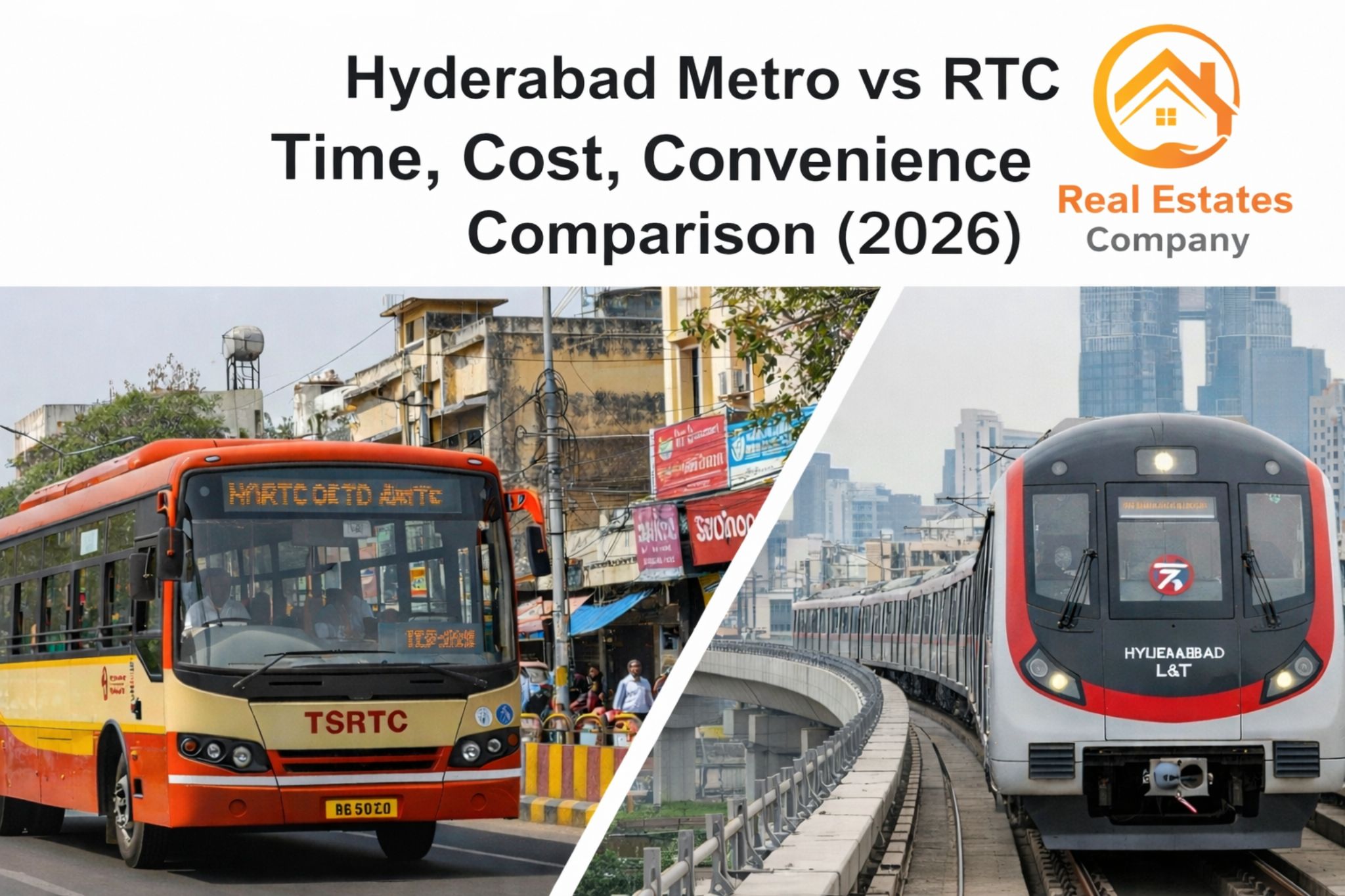
Hyderabad Metro vs RTC Travel: Time, Cost & Convenience Comparison (2026)

Published by : Hemanth Kumar
Jan 07, 2026
Hyderabad Metro vs RTC travel comparison showing time cost and convenience in 2026
In this Story

Understanding Hyderabad’s Public Transport Landscape

1. Time Efficiency: How Fast Can You Reach Your Destination?

2. Cost Comparison: Which Is More Budget-Friendly?

3. Comfort & Travel Experience

4. Coverage & Accessibility Across the City

5. Peak Hour Reality: Morning & Evening Rush

6. Safety, Reliability & Daily Trust

7. Flexibility & Last-Mile Connectivity

8. Which One Should You Choose?

Final Thoughts: Metro vs RTC Is Not a Competition

Hyderabad has grown rapidly over the last decade. From being a city with limited traffic pressure, it has transformed into a major IT and business hub with expanding residential zones, tech parks, and commercial corridors. With this growth, one daily challenge every resident faces is commuting.

Among all public transport options, two systems dominate everyday travel:

Hyderabad Metro Rail and TSRTC (Telangana State Road Transport Corporation) buses.

Both are essential. Both serve millions daily. Yet, commuters often ask:

Which one is better? Metro or RTC?

The answer is not as simple as choosing one over the other. It depends on time, cost, comfort, distance, peak hours, and personal routine. This detailed guide compares Hyderabad Metro and RTC buses from a real commuter’s perspective, helping you choose the right option for your daily needs.

Understanding Hyderabad’s Public Transport Landscape

Hyderabad’s public transport ecosystem works like a network rather than isolated systems. Metro trains connect major corridors quickly, while RTC buses ensure connectivity to areas where metro lines do not reach. Many daily commuters rely on a combination of both, depending on where they live and work.

Before diving into comparisons, it’s important to understand what each system is designed for:


  • Hyderabad Metro focuses on fast, predictable, long-distance urban travel.


  • RTC buses focus on maximum coverage, affordability, and flexibility.


Now, let’s compare them point by point in a practical, everyday context.

1. Time Efficiency: How Fast Can You Reach Your Destination?

Time is the biggest deciding factor for most commuters, especially office-goers and students.

Hyderabad Metro  Predictable & Fast

The metro operates on elevated tracks, completely separated from road traffic. This is its biggest strength. Trains maintain almost the same travel time regardless of peak or non-peak hours.


For example:

  • Ameerpet to HITEC City by metro usually takes around 25–35 minutes


  • The same route by road during peak hours can take 60–90 minutes


Metro trains run at fixed intervals, and delays are rare. Even during rush hours, you can estimate your arrival time with confidence.

RTC Buses – Traffic Dependent

RTC buses operate on city roads, which means:


  • Travel time depends heavily on traffic


  • Peak hours, rain, roadworks, and accidents can cause delays


  • Early mornings and late nights are faster, but office hours are unpredictable


Verdict on Time:

If time certainty matters, Metro clearly wins. RTC works well only when traffic conditions are favorable.

2. Cost Comparison: Which Is More Budget-Friendly?

Cost is where RTC often has an advantage, especially for short trips.

RTC Bus Fares

RTC offers multiple bus types:


  • Ordinary buses (lowest fares)


  • Metro Express


  • Deluxe and AC buses


  • Electric buses on select routes


Short-distance fares can start as low as ₹5–₹10, making RTC ideal for nearby travel. Monthly and student passes further reduce costs for frequent riders.

Metro Ticket Pricing

Metro fares are distance-based:

  • Minimum fare is affordable


  • Longer distances cost more


  • Smart Cards offer small discounts and convenience


For long daily commutes, metro may feel slightly costlier than ordinary buses, but the trade-off comes in time and comfort.

Verdict on Cost:

For pure affordability, especially short distances, RTC is cheaper. Metro is cost-effective when time saved is valued.

3. Comfort & Travel Experience

Comfort can make or break a daily commute, especially for long journeys.

Metro Comfort

Metro trains are:


  • Fully air-conditioned


  • Clean and well-maintained


  • Smooth and noise-controlled


  • Equipped with escalators, lifts, and digital displays


Even standing travel feels manageable due to better crowd control and coach design.

RTC Comfort

RTC comfort varies by bus type:

  • Ordinary buses can be crowded and non-AC


  • AC buses are comfortable but limited in number


  • Seating is not guaranteed during peak hours


For long travel durations, especially in summer, buses can feel tiring.

Verdict on Comfort:

For comfort and stress-free travel, Metro is superior.

4. Coverage & Accessibility Across the City

This is where RTC shines.

RTC Coverage

RTC buses reach:

  • Inner residential colonies


  • Old City areas


  • Outskirts and suburban routes


  • Areas with no metro stations


You can often find a bus stop within walking distance, making RTC highly accessible.

Metro Coverage

Metro operates on three main corridors and connects:

  • IT hubs


  • Commercial zones


  • Major junctions


  • Transit points


However, areas far from metro lines require additional transport to reach stations.

Verdict on Coverage:

For city-wide reach, RTC is unmatched. Metro is excellent but corridor-limited.

5. Peak Hour Reality: Morning & Evening Rush

Metro During Peak Hours

Yes, metro trains get crowded. But:

  • Trains arrive every few minutes


  • Movement remains smooth


  • Travel time remains almost unchanged


Using Smart Cards or QR tickets makes entry faster.

RTC During Peak Hours

RTC buses during rush hours face:

  • Heavy traffic


  • Longer waiting times


  • Standing travel for long distances


  • Route delays


Peak hours amplify all road-related issues.

Verdict on Peak Hours:

During office hours, Metro is far more reliable.

6. Safety, Reliability & Daily Trust

Metro Safety

Metro stations and trains have:

  • CCTV surveillance


  • Security personnel


  • Dedicated women’s coaches


  • Clear announcements and guidance


This creates a safer and more organized environment.

RTC Safety

RTC buses are generally safe, but:

  • Crowding can be an issue


  • Delays during bad weather are common


  • Comfort and reliability vary by route


Verdict on Safety & Reliability:

Metro offers a higher sense of safety and consistency.

7. Flexibility & Last-Mile Connectivity

No public transport system works alone.

RTC buses provide excellent last-mile connectivity, helping commuters reach:


  • Homes inside colonies


  • Areas far from metro stations


  • Places where autos may be expensive


Metro is best for long stretches, but buses complete the journey.

This is why many commuters use:

RTC → Metro → RTC

This hybrid approach balances speed and reach.

8. Which One Should You Choose?

There is no universal winner.

Choose Hyderabad Metro if you:

  • Travel long distances daily


  • Work in IT corridors or commercial hubs


  • Value time, comfort, and predictability


  • Commute during peak hours


Choose RTC Buses if you:

  • Travel short distances


  • Need low-cost transport


  • Live in areas without metro access


  • Travel during non-peak hours


For most people, the smartest option is using both together.

Final Thoughts: Metro vs RTC Is Not a Competition

Hyderabad Metro and RTC are not rivals they are partners in urban mobility. One focuses on speed and efficiency, the other on reach and affordability. Together, they make daily commuting possible for millions.

As Hyderabad continues to grow, smart commuting is not about choosing one system forever. It’s about using the right transport at the right time, based on your daily routine.

Understanding this balance can save you:

  • Time


  • Money


  • Energy


  • Daily stress


And that, ultimately, is what better urban travel is all about.

Blogs

Clicky
homefleet logo

About Us

Property Areas

Tellapur
Narsingi
Mokila
Kollur

Resources

Legal
Remote Support

Terms of use | Privacy

Copyright by 2023 @ Home Fleet
Developed by:
Tvisha